



Description
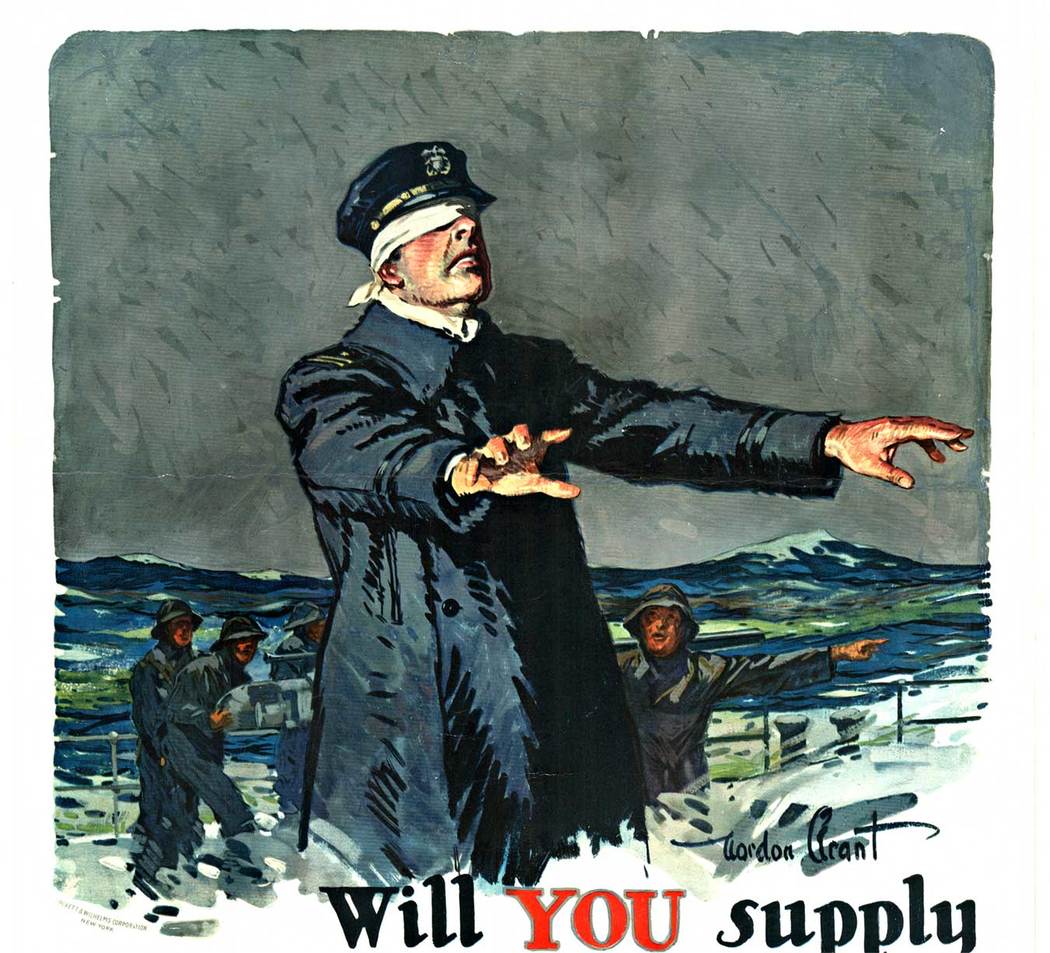
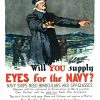
“Will You Supply Eyes for the Navy?” by Gordon Grant – 1917 WWI Poster
Excellent! This is a historically significant piece with confirmed artist attribution. Here’s its remarkable story:
? Artist Information
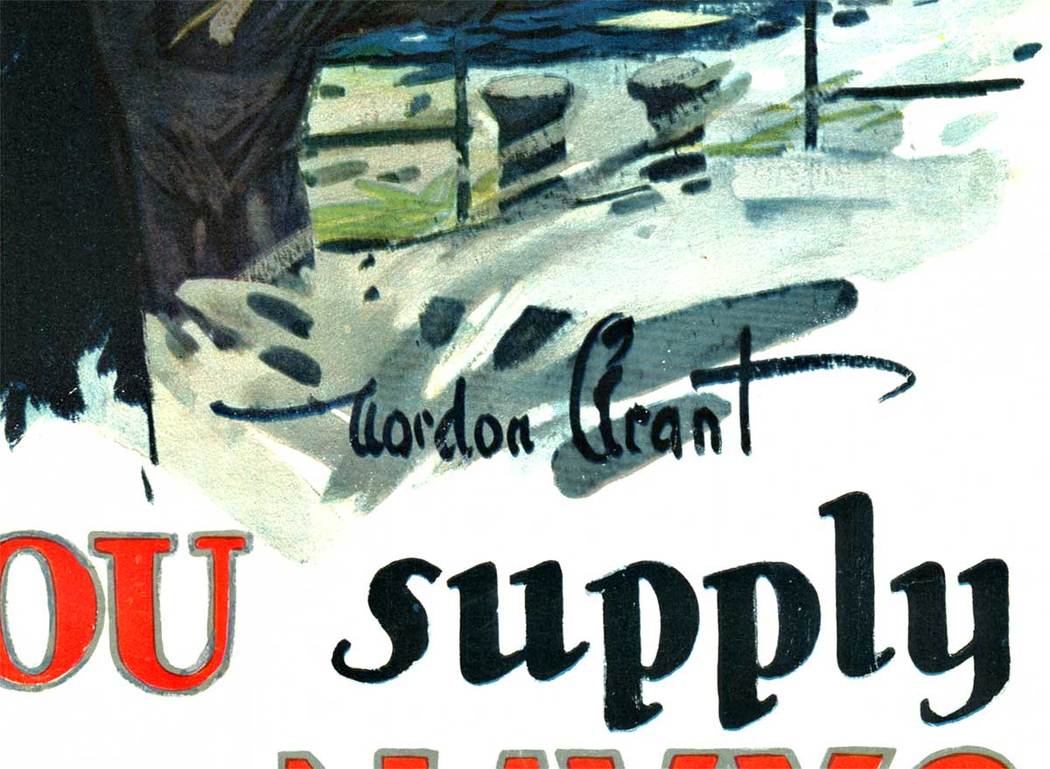
Gordon Grant (1875-1962)
- ? Renowned marine painter and watercolorist
- ? Master of nautical imagery and seascapes
- ?️ Created powerful propaganda art during WWI
- ?️ Works are part of the U.S. Navy’s official art collection
Reference: Rawls 190 (Very Rare)
? Historical Context
The Campaign:
- ? Created in 1917 during America’s involvement in WWI
- ?️ Published by Sackett Wilhelms Corporation, New York
- ? Part of the “Eyes for the Navy” campaign
- ⚓ Targeted civilians to donate optical equipment to the Navy
The Strategic Need:
- ? Binoculars and spy-glasses were critical military equipment
- ? Essential for spotting enemy vessels at sea
- ? Supply shortages made civilian donations vital
- ⚔️ U-boats posed constant threat to American naval operations
? Visual Symbolism & Psychological Power
The poster’s genius lies in its devastating simplicity:
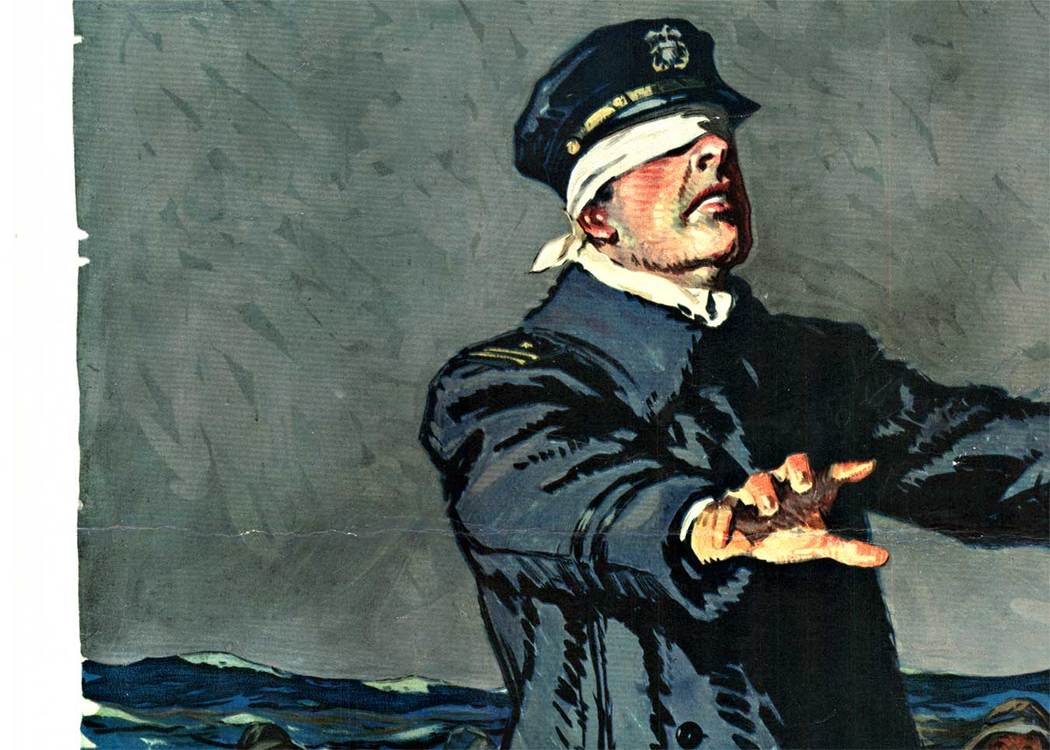
- The Blindfolded Captain ⚓
- ? Helpless without optical equipment
- ?✈️ A trained naval officer rendered ineffective
- ⛓️ Symbolizes the Navy’s vulnerability and dependence on civilians
- ? Creates urgency through image of incapacity
- The Reaching Gesture ?
- ? Desperate appeal for help
- ? Open hands suggest both pleading and readiness
- ? Despite blindness, the captain stands firm—suggesting resilience if equipped
- ? Directs viewer’s attention to the urgent need
- The Naval Setting ?
- ⛵ Rough seas in background suggest danger
- ? Authenticates the scenario as real combat situation
- ? Gray-blue tones create somber, serious atmosphere
- ? Danger is present and constant
- Soldiers in Background ?
- ? Additional crew members also seemingly helpless
- ? Emphasizes collective vulnerability
- ? Shows scale of the problem—entire naval operations affected
? The Messaging
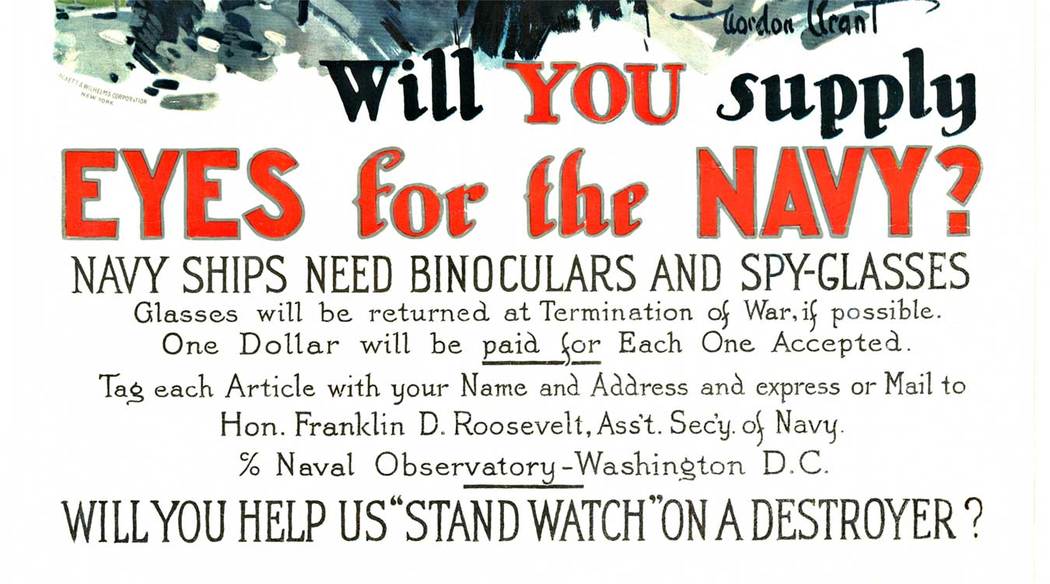
“Will You Supply Eyes for the Navy?”
- ? Direct question transforms viewers into potential participants
- ? “Eyes” = Literal binoculars/spy-glasses AND metaphorical vigilance
- ⚓ Frames donation as essential war support
- ?? Creates personal responsibility for naval capability
“Will You Help Us ‘Stand Watch’ on a Destroyer?”
- ? Specific military appeal—destroyers were crucial vessels
- ?️ “Stand Watch” = Military terminology making civilians understand their role
- ? Suggests citizens are joining the Navy’s mission
? The Incentive Structure
The poster includes practical instructions:
- ? “One Dollar will be paid for Each One Accepted” – Compensation for donors
- ? Clear mailing address: Hon. Franklin D. Roosevelt, Ass’t Sec’y of Navy
- ?️ “Tag each Article with your Name and Address”
- ? “Glasses will be returned at Termination of War, if possible”
Why this matters:
- ? Compensation made participation economically viable
- ? Name-tagging ensured accountability and return
- ? Addressed practical concerns: Would I get my equipment back?
- ? Built trust between public and government
? Artistic Excellence
Grant’s Masterful Execution:
- ?️ Watercolor technique – Loose, expressive brushwork
- ? Powerful portraiture – Captain’s face conveys resolve despite handicap
- ? Atmospheric seascape – Convincing maritime environment
- ? Emotional restraint – Doesn’t overplay drama; lets image speak
- ? Perfect composition – Figure dominates, demanding attention
- ? Limited color palette emphasizes key elements
Why It’s Propaganda Art at Its Best:
- ? Rational appeal (Navy needs equipment)
- ? Emotional appeal (patriotism, duty)
- ?️ Visual power (blindfolded officer = vulnerability)
- ? Clear call-to-action (donate glasses, mail them in)
- ? Aesthetically sophisticated—not crude or heavy-handed
?️ Historical Significance
Part of U.S. Navy Official Art Collection:
- ? Recognition as significant military and artistic document
- ?️ Preserved as part of American heritage
- ? One of the finest examples of WWI propagandist art
- ? Featured in Rawls bibliography (standard reference for WWI posters)
? Specifications
- ? Size: 30″ H × 20″ W (substantial, commanding format)
- ?️ Original lithograph – Not a reproduction
- ? Professionally linen-backed
- ✅ Very good condition with restored fold marks/tears (authentic to period)
- ? Great colors – No fading
? Rarity & Collectibility
This is an exceptionally rare poster because:
- ? Specific campaign with limited production run
- ? Reference: Rawls 190 indicates high rarity status
- ?️ Most examples were used and discarded—survivors are scarce
- ? Created by a master marine artist—elevated artistic pedigree
- ?? Part of Navy’s official collection—institutional validation
? Legacy
This poster represents a fascinating moment when:
- ?? The government mobilized civilian participation in war equipment procurement
- ? High-quality fine art was weaponized for public persuasion
- ?️ A single powerful image created immediate understanding and motivation
- ⚓ Citizens understood they were directly supporting naval operations
Gordon Grant’s “Eyes for the Navy” remains one of the most psychologically sophisticated and artistically masterful pieces of WWI propaganda ever created. ?️⚓





Reviews
There are no reviews yet.