




Description
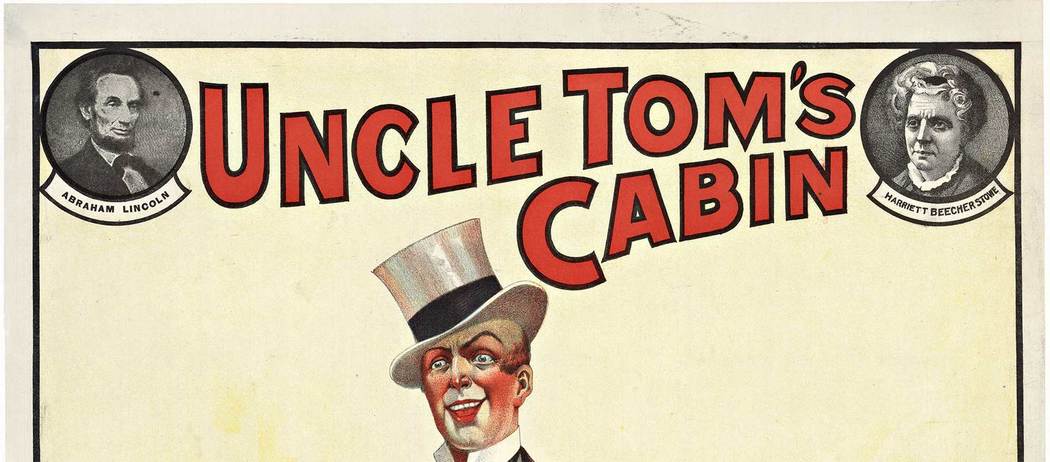
Look at the confidence in that stance. This man is Marks—not the moral center of Harriet Beecher Stowe’s 1852 novel, but the slick, scheming slave-catcher who embodied theatrical villainy for turn-of-the-century audiences. By 1900, when Ackermann-Quigley printed this poster in Kansas City, Uncle Tom’s Cabin had already spawned over 400 separate theatrical companies touring America. The “Tom Shows,” as they were known, became a cultural phenomenon that eclipsed the novel itself—traveling circuses of melodrama, comic relief, and moral absolutism that reached small towns and big cities alike.
The lithographer understood theatrical swagger. Marks wears a burgundy tuxedo and top hat, rendered in rich earth tones against a warm cream backdrop. His posture—one hand planted on his hip—projects cunning authority. The composition is deliberately constrained, isolating the figure so nothing distracts from his character. The color palette (burgundy, tan, yellow ochre) feels intimate and intimate, almost domestic despite depicting a professional seducer and trafficker in human lives. It’s a masterclass in visual contradiction: aesthetic beauty serving a morally repugnant character, which is exactly what the stage production demanded.
This is an original stone-lithograph, in museum-ready condition on period linen backing. Ackermann-Quigley was a major regional printing house that produced theatrical posters, moving-picture advertisements, and chromolithographic work throughout the early 1900s. The stone separation is flawless—that burgundy holds its depth, registration is sharp edge to edge, the cream ground hasn’t yellowed unevenly. For collectors hunting theatrical ephemera, American stage history, or regional printing from the lithographic heartland, this original vintage poster is documentary evidence of how live performance shaped 19th-century social consciousness.
The deeper story is uncomfortable but essential. By staging Uncle Tom’s Cabin, American theater transformed Stowe’s anti-slavery arguments into spectacle and, often, entertainment that neutralized the novel’s radical critique. Marks—minstrelsy-adjacent, comedic relief in many productions—represented a type: the small-time villain, easily outwitted, morally simple. Yet this poster survives as artifact of a real moment when traveling companies brought stories of slavery, resistance, and moral reckoning to communities across the nation, whether or how faithfully they honored the source material.
All posters come with a Free Certificate of Authenticity with your shipment.


Reviews
There are no reviews yet.