

Description
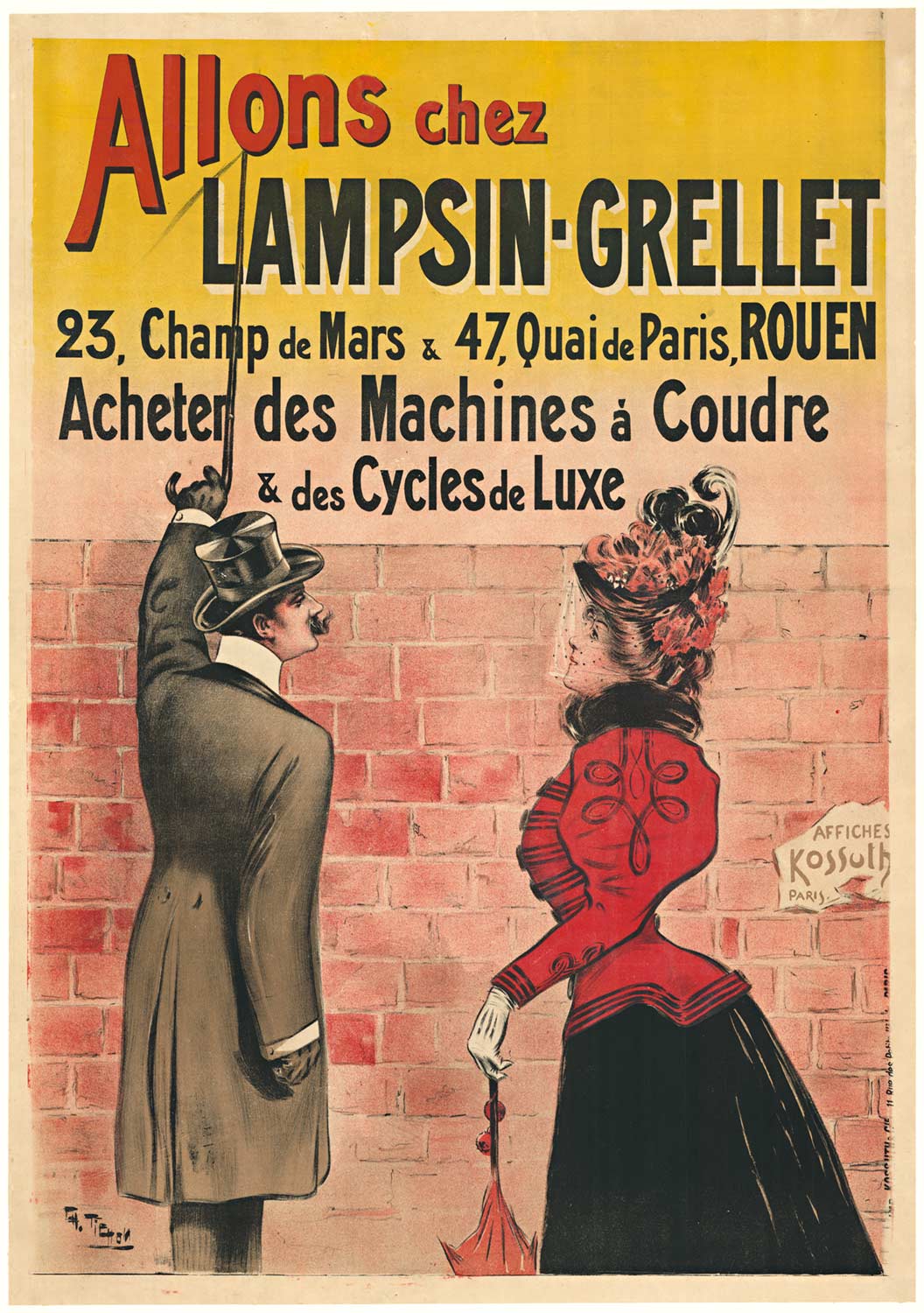
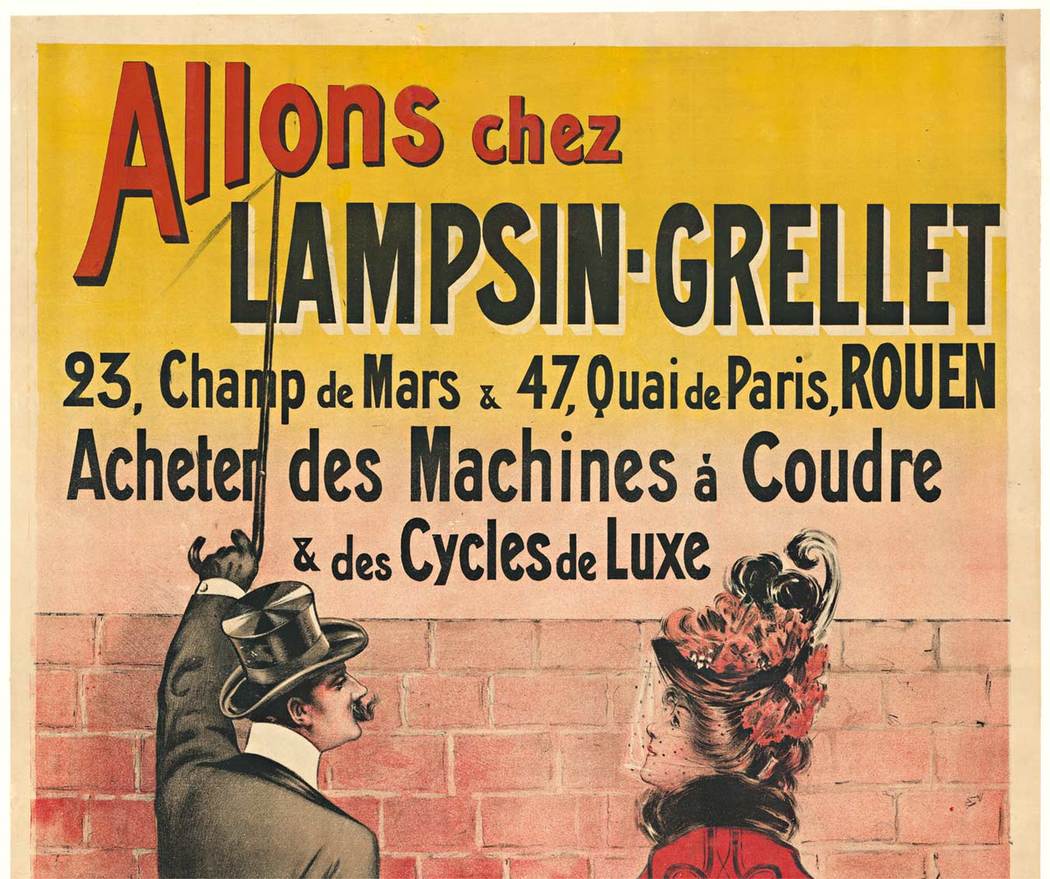
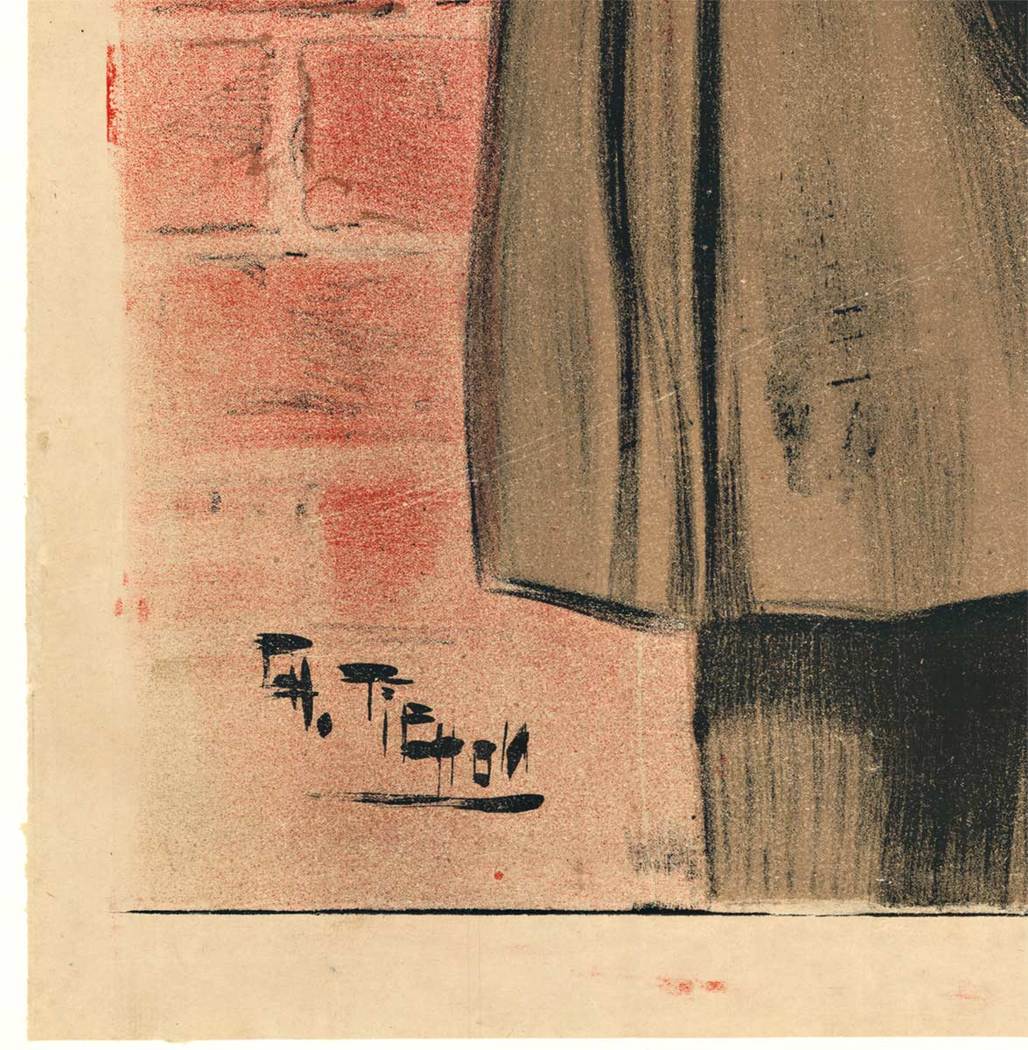
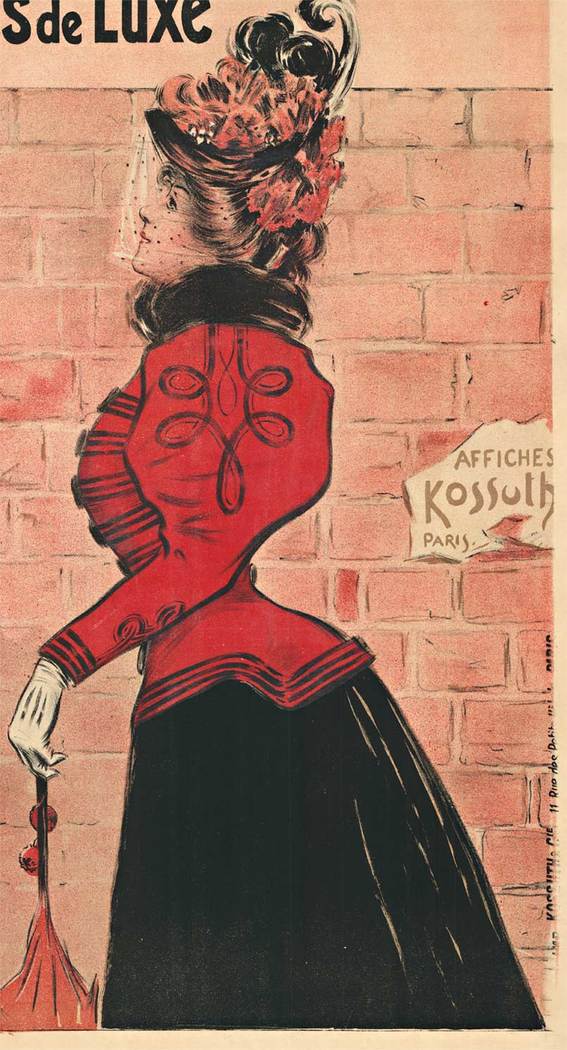
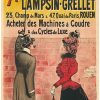
Allons chez Lampsin-Grellet is an exceptional turn-of-the-century stone lithograph by French artist Charles Tichon, circa 1900—a masterpiece of Belle Époque commercial art advertising two revolutionary luxury commodities of the era: sewing machines and bicycles.
At the turn of the twentieth century, both bicycles and sewing machines represented cutting-edge technology and aspirational status symbols reserved for the wealthy elite. Bicycles had revolutionized personal mobility and freedom, particularly for women; sewing machines, still sophisticated and expensive, signified modern domesticity and economic advantage. Lampsin-Grellet, operating from their flagship location at 23 Champ de Mars and 47 Quai de Paris in Rouen, positioned themselves as premier purveyors of these technological innovations to affluent customers across France.
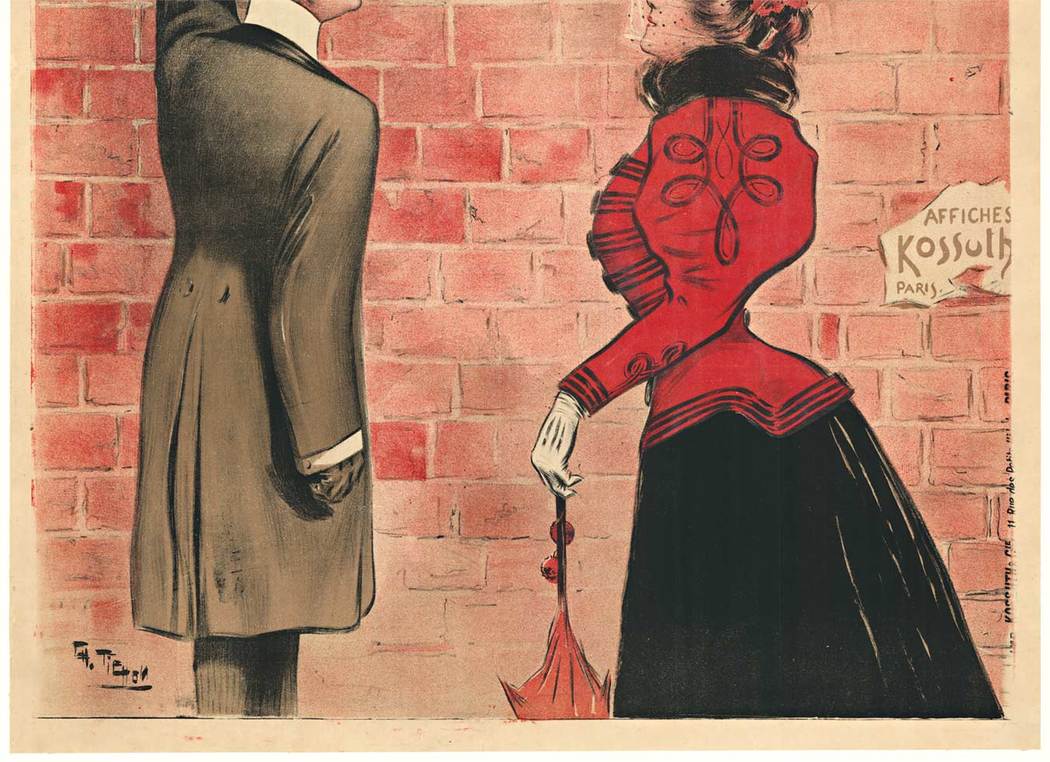
Tichon’s design brilliantly captures this positioning through dynamic composition: an elegantly dressed couple in profile, the woman gesturing confidently in her striking red coat, the man in olive-toned formal wear. The warm brick-red background grounds the figures in commercial solidity, while the hand-lettered typography “Acheter des Machines à Coudre & des Cycles de Luxe” (Purchase Sewing Machines and Luxury Bicycles) reflects refined Art Nouveau sensibilities without overstatement. The composition perfectly balances aspiration with accessibility—sophisticated enough for the luxury market, direct enough for commercial impact.
Charles Tichon (XIX–XX centuries) contributed significantly to the commercial art renaissance that elevated advertising to legitimate artistic expression. This stone lithograph is a crucial artifact of industrial design history and consumer culture at the turn of the century.
Rarity and Authentication: This is believed to be the only surviving copy from the past 120 years—a testament to both the poster’s fragility and historical scarcity. Originally acid-free conservation-mounted with professional archival linen backing, the poster remains in excellent condition. For collectors of Belle Époque advertising, Art Nouveau design, industrial history, and early twentieth-century commercial art, this authenticated Tichon lithograph offers irreplaceable visual documentation of aspirational consumer culture at a pivotal moment in modern design.



&url=https://www.thevintageposters.net/product/original-1900-allons-chez-lampsin-grellet-charles-tichon-lithograph/&media=https://www.thevintageposters.net/wp-content/uploads/2025/11/8679-721x1024.jpg)
Reviews
There are no reviews yet.