
Description
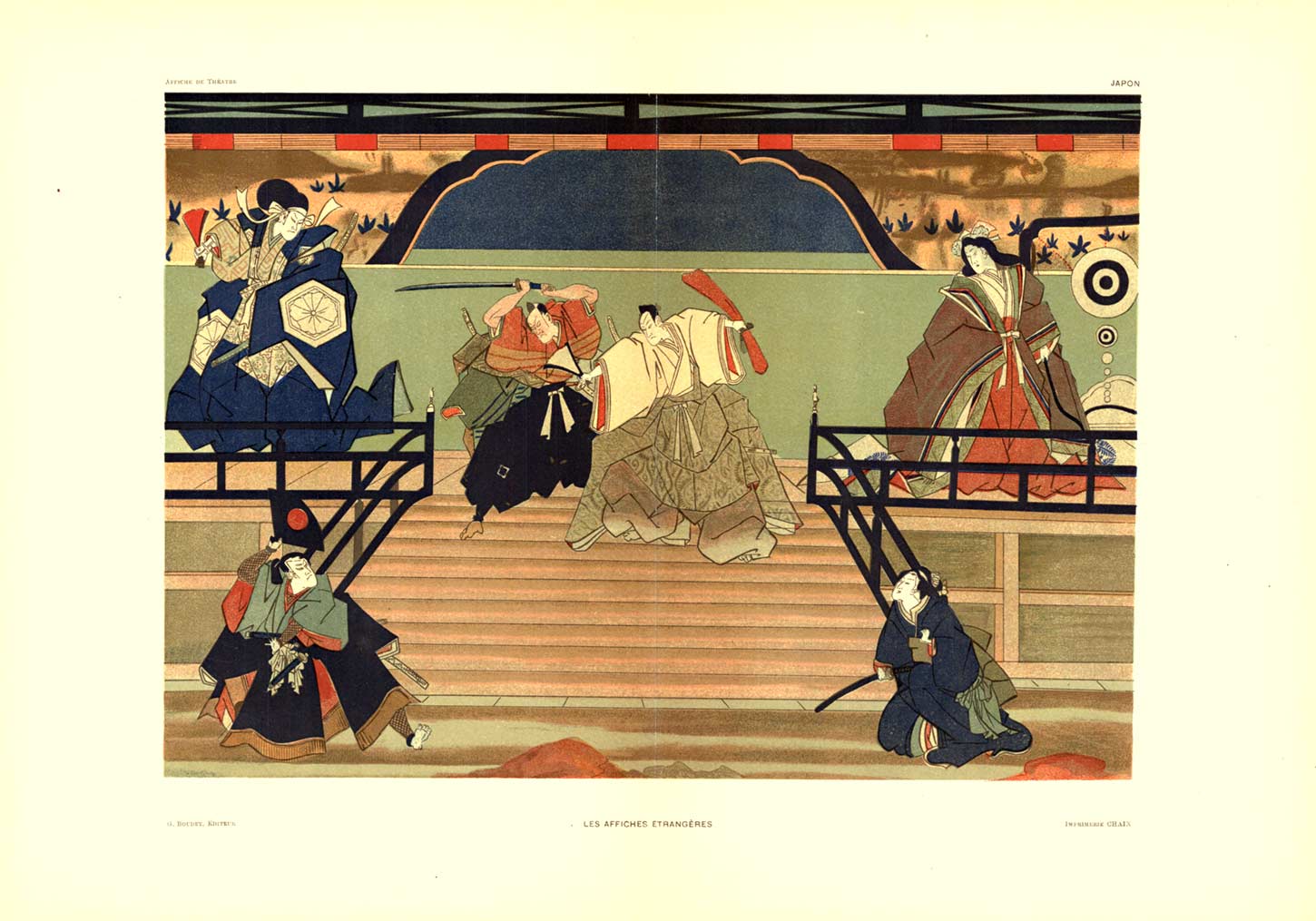
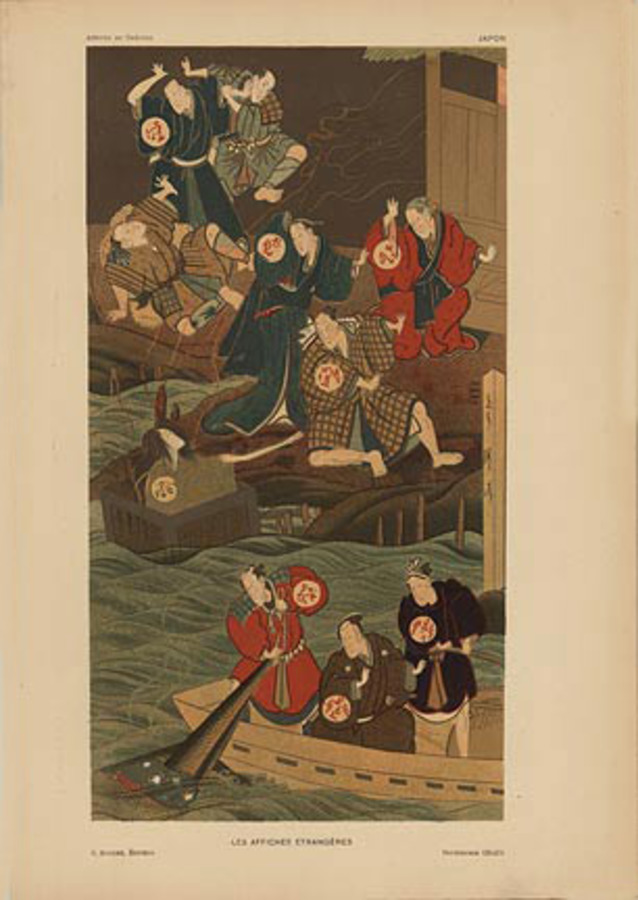
This is a masterwork of East-West artistic dialogue—Utagawa Yoshiiku’s Japanese theatrical scene, published by G. Boudet Éditeur in 1897 as part of Les Affiches Étrangères Illustrées. Yoshiiku was a legendary figure in Japanese art, a bridge between traditional ukiyo-e and modern lithographic innovation. When G. Boudet commissioned him for this international collection, he wasn’t asking for a museum piece or historical document. He was asking for a living artist to share what contemporary Japanese theater meant—its energy, its aesthetic sophistication, its visual power. Yoshiiku answered with this: a scene that speaks fluently in both traditions at once. This is also a double-sheet that was folded in the middle.
What Makes This Design Special
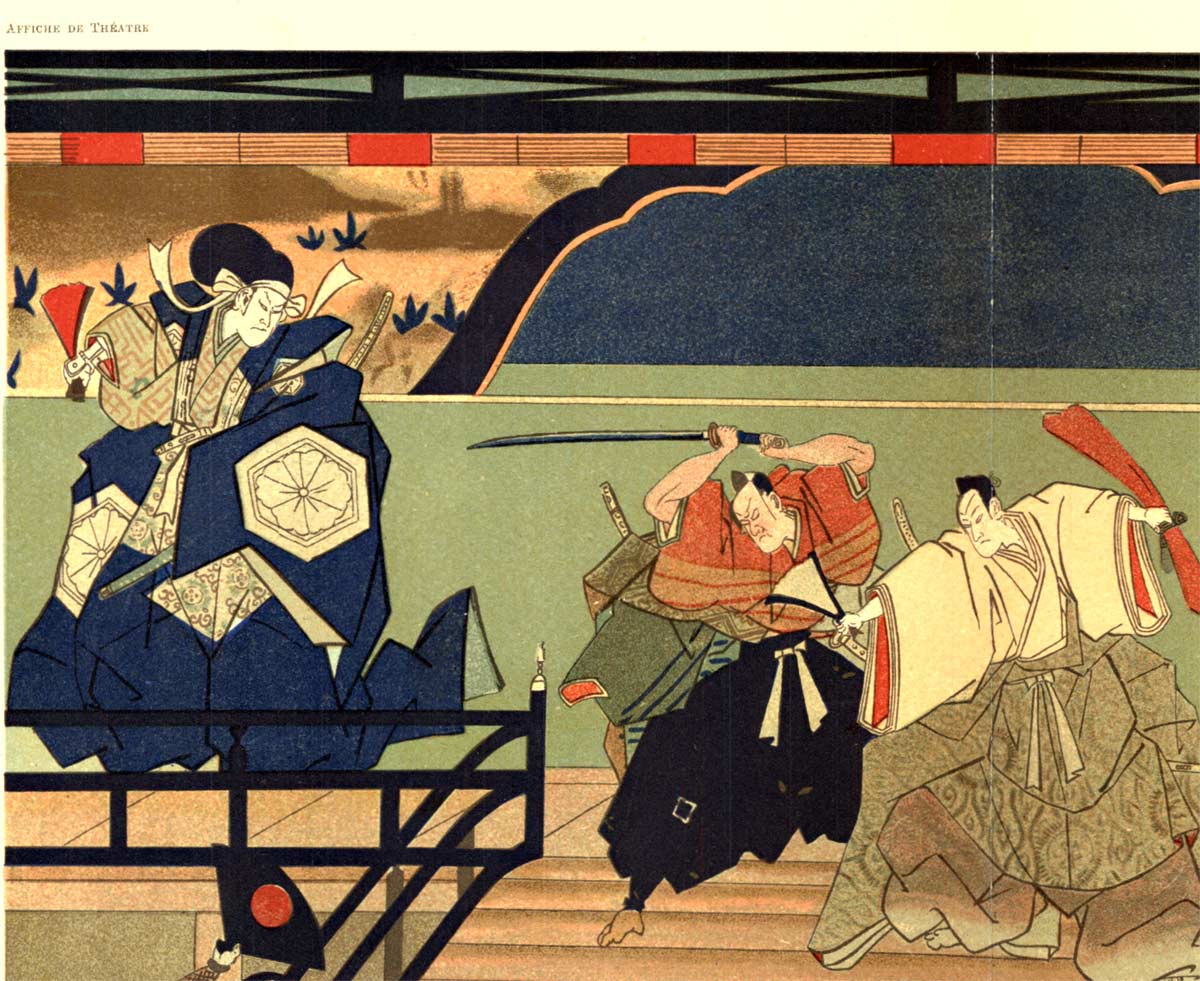
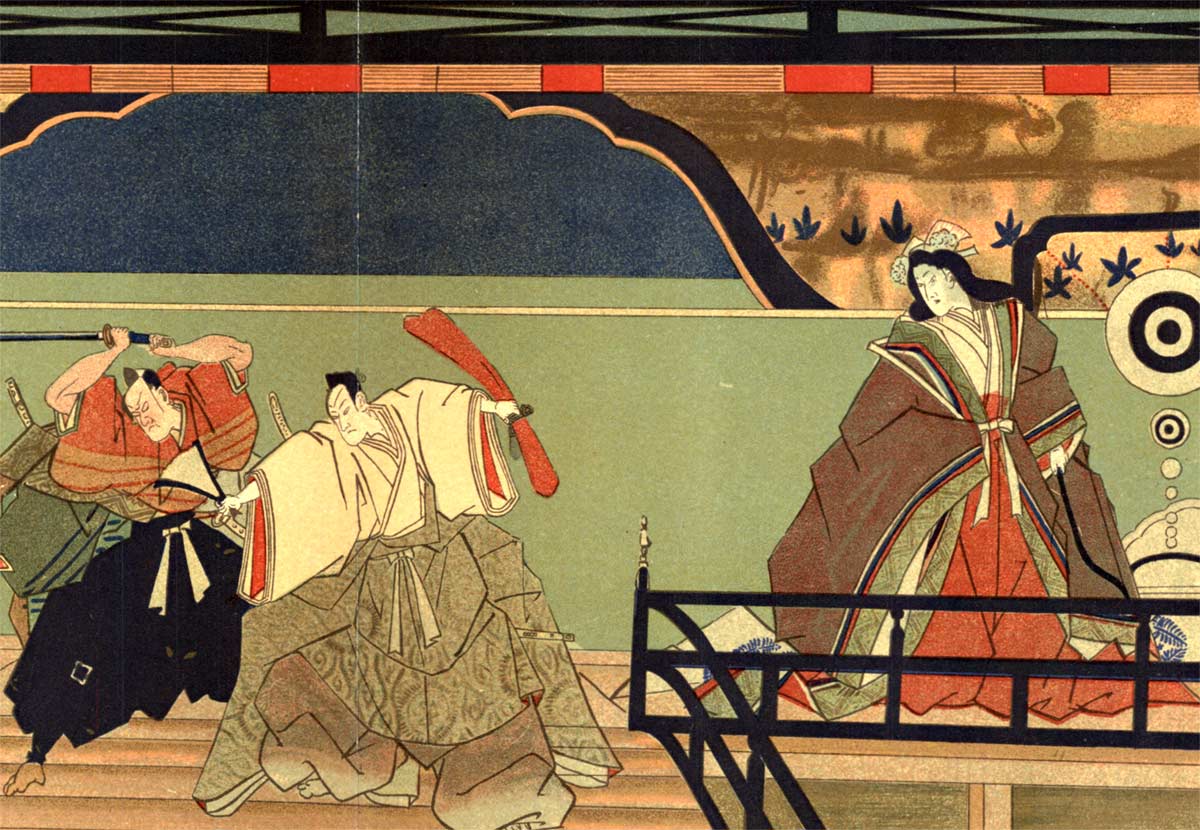
Look at Yoshiiku’s compositional mastery. The theatrical performers occupy the center, elevated on their stage, commanding attention. The color palette sings with warmth—those golden tones, the sophisticated earth pigments, the careful balance of figure and space. Notice how the ukiyo-e tradition seamlessly meets lithographic color theory. The figures are rendered with precise elegance—each gesture deliberate, each costume detailed. Your eye follows the performers’ movement across the stage. The architectural framing—the platform, the spatial depth—creates theatrical presence without overwhelming the figures themselves. This wasn’t a translation of Japanese art for European consumption. This was a Japanese master speaking directly, using lithography as his contemporary voice.
Why This Moment Matters
By 1897, Japonisme had captivated European artistic culture for decades. But this poster represents something rarer—a genuine artistic exchange, not appropriation. G. Boudet’s Les Affiches Étrangères was Europe saying: “Show us who you are, not who we imagine you to be.” Yoshiiku’s contribution is profound: a 64-year-old artist (he lived 1833–1904) applying modernist lithographic innovation to preserve and celebrate Japanese theatrical tradition. This is a document of Japanese artistic confidence—Yoshiiku proving that Japanese aesthetics didn’t need European interpretation to matter. They were powerful on their own terms. The 1890s fascination with Japan wasn’t shallow tourism. It was a genuine artistic hunger to understand non-Western creative excellence.
Your Piece of History
This original stone-lithograph has aged magnificently. The color saturation maintains its warmth and vibrancy. The fine vellum paper stock gives the piece a distinctive tactile presence. It’s been professionally preserved in archival conservation standards and is ready to frame. You’re not just acquiring a beautiful image—you’re preserving a rare moment of authentic artistic dialogue between Japanese and European modernism, a document proving that innovation wasn’t a European monopoly in the 1890s.




,%20Les%20Affiches%20Étrangères%20Illustrées,%201897%20|&url=https://www.thevintageposters.net/product/japanese-theatrical-scene-yoshiiku-1897-affiches-etrangeres/&media=https://www.thevintageposters.net/wp-content/uploads/2025/12/LAE0011-Yoshiiku-Utagawa-Japanese-theater-Affiches-Etrangers-1024x717.jpg)
Reviews
There are no reviews yet.