


Description
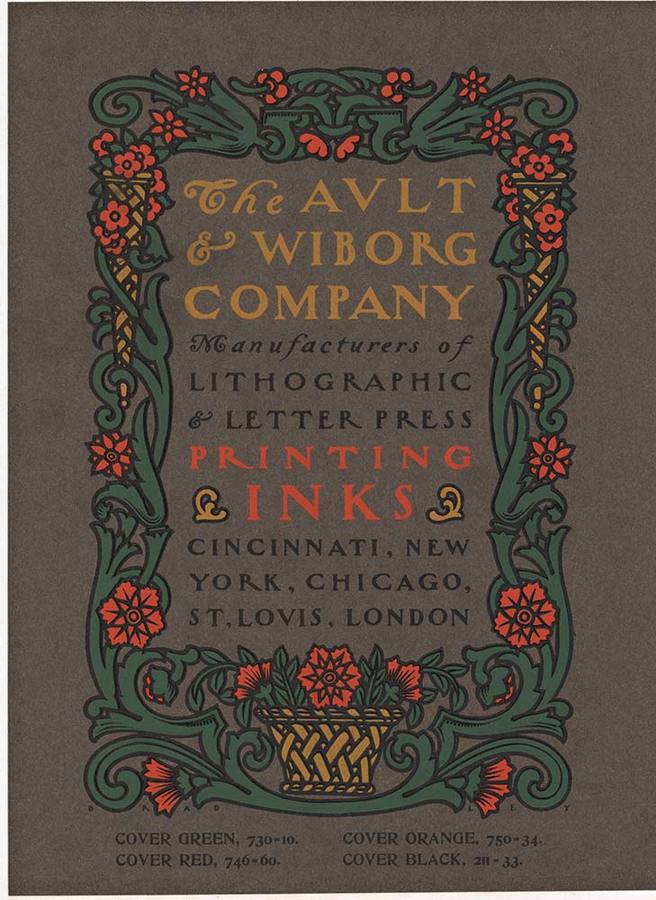
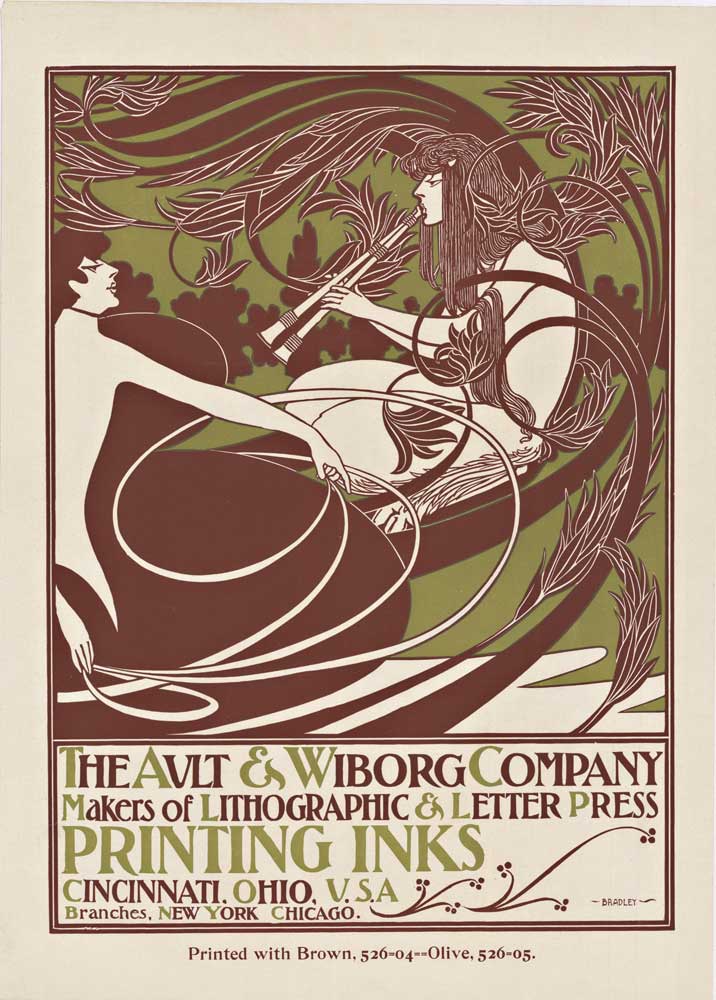
This exceptional 1897 William Bradley lithograph occupies a critical position in the Ault & Wiborg advertising chronology—an early variant that represents the original conception of this celebrated design before subsequent printings refined the composition. What makes this impression historically significant is its material distinctiveness: darker ink formulation and notably larger text along the base establish this as the first printing of the image, a consequence of Bradley’s and the company’s methodical refinement of each design through the advertising series.
The composition presents a masterwork of decorative framing: ornamental orange flowers and foliate patterns create an elaborate border that contains The Ault & Wiborg Company’s identification and service description—”Manufacturers of Lithographic & Letter Press Printing Inks.” The orange blossoms themselves serve dual purposes, exactly as intended. Visually, they demonstrate the brilliant, warm color palette that the company’s advanced coal-tar dyes had made achievable. Conceptually, they reference fertility, abundance, and natural beauty, positioning industrial chemistry as the servant of artistic refinement rather than its antithesis.
The larger text scale in this first-printing variant reveals an important design philosophy: early iterations prioritized legibility and direct commercial messaging, while later printings could assume familiarity and employ more sophisticated typographic integration. This speaks to Bradley’s iterative design process and the company’s understanding that advertising excellence emerges through refinement, not accident. Finding a documented first printing variant in excellent condition represents a significant opportunity for collectors pursuing comprehensive series scholarship or tracing the evolution of Bradley’s artistic thinking across the complete A&W portfolio.
The original measures 8.75″ x 11.75″, rendered in the darker ink characteristic of early impressions. Linen-backed and in fine condition, this piece is ready to frame and study. As institutions and serious collectors prioritize variant documentation, early printings like this become increasingly valued as records of creative process.



Reviews
There are no reviews yet.