
Description
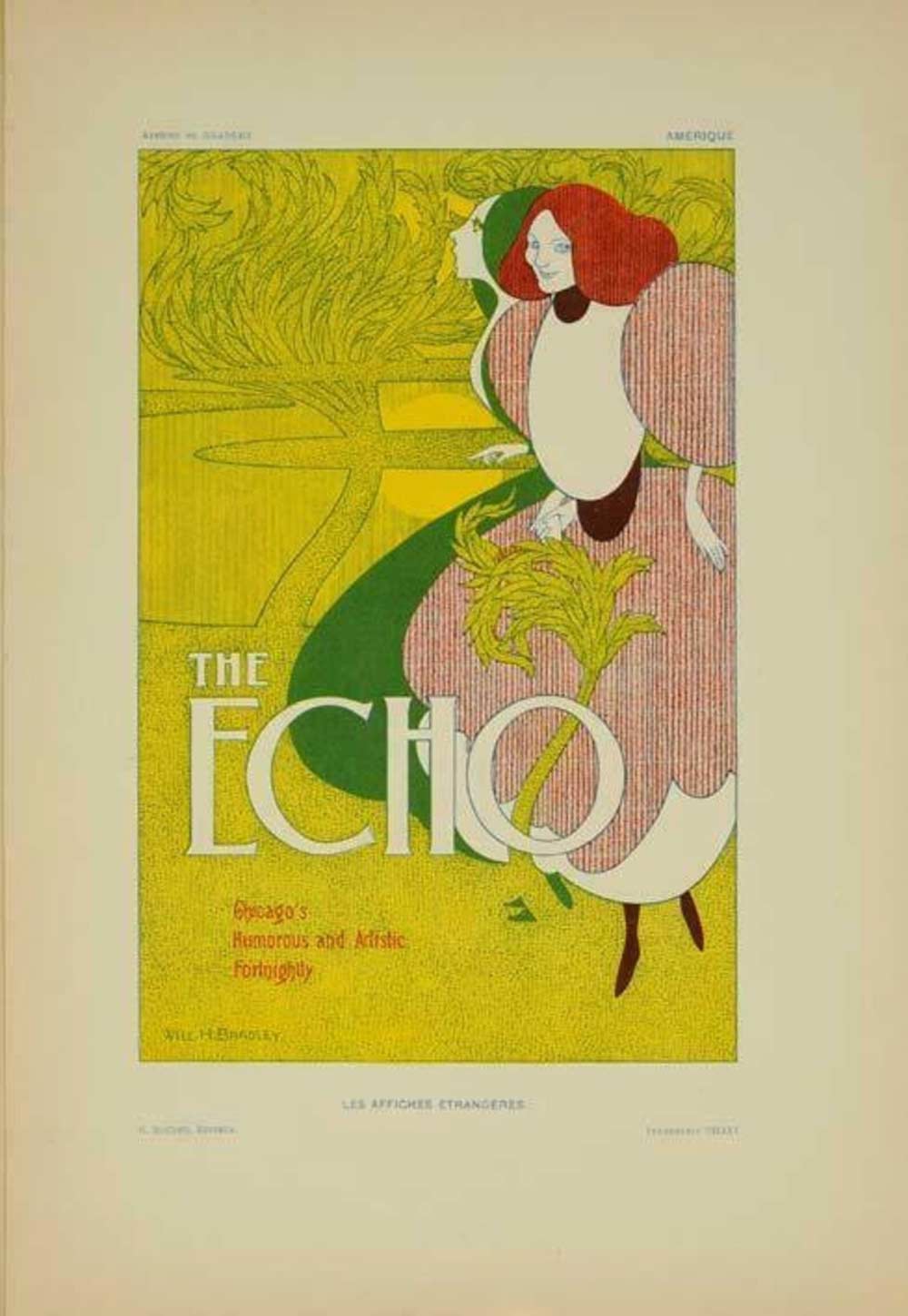
Meet Will H. Bradley’s dynamic “The Echo” poster—a 1897 masterpiece representing the convergence of American design innovation and publishing authority circulating through European institutional channels. This is No. 281 from the prestigious Les Affiches Étrangères Illustrées series, directed under Jules Chéret’s celebrated vision, positioning Bradley before discerning Parisian collectors, design institutions, and cultural authorities. By 1897, Bradley wasn’t merely a poster designer—he was a publishing innovator who founded and directed “Bradley, His Book,” his own design journal devoted to art, literature, and printing excellence, making his selection for this exclusive Parisian series a validation of his institutional authority.
Look at the composition—the elegantly stylized woman with flowing reddish-brown hair moves dynamically across the canvas, her graceful form and flowing drapery creating visual rhythm while the harmonious yellow and pink color palette against a green background demonstrates Bradley’s assured chromatic mastery. The typography integrates seamlessly into the design; “The Echo” announces itself not as external text but as part of the unified artistic vision. This is Bradley’s mature aesthetic: confident formal innovation, decorative sophistication, and the conviction that commercial publication design could achieve a high artistic statement.
You’re acquiring far more than a magazine advertisement; you’re holding documentary evidence of American design publishing authority at its most influential moment. Bradley’s own publication, “Bradley, His Book,” established him not just as a designer but as a tastemaker, an editor, and a cultural authority shaping the American aesthetic conversation. The Echo poster demonstrates his reach beyond his own publication into other design journals, positioning him as the preeminent figure whose approval and artistic presence validated design periodicals across multiple channels. Chaix’s printing excellence and vellum paper stock preserved this vision in museum-caliber form.
Here’s what makes this poster extraordinary: the convergence of publishing authority (Bradley as editor and design tastemaker), artistic maturity (Arts and Crafts meets emerging modernism sophistication), cultural validation (Parisian institutional recognition of American publishing leadership), and historical documentation (1897—the moment American design publishing achieved international prestige). Every element—from the confident color strategy to the integrated typography—positions this as a cornerstone piece for collections emphasizing American design authority, the genealogy of design publishing, and Belle Époque institutional prestige.




Reviews
There are no reviews yet.