
Description
The Intersection of Two Worlds: Cycling, Wine, and Consumer Culture in 1920s Belgium
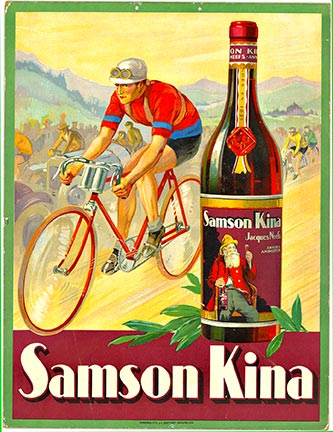
The 1920s marked a peculiar moment in European advertising. Bicycle racing had transcended elite sport and become a mass spectacle—entire villages lined roads to watch cyclists pass. Simultaneously, wine and liquor brands were discovering the power of sports imagery to move product. Samson Kina understood this convergence perfectly. By pairing a dynamic cyclist with their bottle, they weren’t just advertising wine; they were buying access to the cultural energy that cycling commanded. This original cartone—a Belgian point-of-purchase display lithograph—captures that moment when sporting vigor could be transferred to a beverage through simple, powerful graphic association. Notably, this is where the Vintage bicycle wine poste emerges as a rare artifact from the era.
Samson Kina was a Belgian wine and liquor house that operated during a period when Belgium maintained significant wine trade ties with France and Italy, even as local brewing traditions remained dominant. The Samson Kina brand sought to position itself within the aspirational realm of European wine culture. Commissioning sports imagery for retail display was a direct marketing strategy: the cartone would hang in cafés, wine shops, and sporting establishments where the target audience naturally congregated. The cyclist became the brand ambassador—fit, vigorous, the embodiment of modern life and physical achievement. Today, a Vintage bicycle wine poste from this brand offers insight into both commercial ingenuity and cultural trends.
The imagery itself is striking: a muscular figure in a red jersey and cycling cap, pedaling a yellow bicycle against a sun-drenched landscape dotted with spectators. The composition is uncluttered—the cyclist dominates the upper two-thirds, and the Samson Kina bottle anchors the lower portion, its distinctive label clearly legible. The color palette (red, yellow, deep wine-bottle maroon, landscape greens, and blues) creates visual drama without overwhelming the viewer. For a point-of-purchase display, clarity was everything. A shopkeeper or café owner needed to recognize the brand and product instantly. Owning a Vintage bicycle wine poste allows collectors to appreciate this visual storytelling up close.
What makes this particular cartone historically valuable is its format and survival. Cartones were thin cardboard stock, designed for indoor display and temporary use—point-of-purchase materials were considered ephemeral, not treasured. Most were discarded after seasons of use or storage damage. Finding an original 1920s Belgian sports-advertising cartone in this condition, with its period-appropriate wear and intact original hanging holes, is genuinely rare. This piece documents not just a brand, but a retail marketing practice that shaped how consumers encountered products in early 20th-century Europe. Thus, the Vintage bicycle wine poste stands as tangible evidence of this shift.
Condition & Authenticity
Original 1920s lithographic cartone on thin cardboard backing (not a reproduction). This is an authentic point-of-purchase display piece in its original cartone format—not linen-backed or professionally restored. Grade B+: Very Good. Original surface patina throughout is consistent with decades of indoor display and storage. Single visible scratch on upper portion of image (not structurally compromising; would benefit from linen-backing if future owner desires archival preservation and restoration). Two small holes at the top edge where the original string/wire attachment was used for hanging. Minor age-appropriate foxing and edge wear. Vivid color saturation throughout—no fading. Includes Certificate of Authenticity from IVPDA-certified dealer.
Collector Appeal
Original 1920s Belgian advertising posters—particularly those combining sports and beverage marketing—appeal to a diverse collector base: vintage cycling enthusiasts seeking period sports imagery; European beverage history collectors; advertising design historians; vintage retail display collectors; and sports memorabilia buyers. The cartone format itself is increasingly recognized by design historians as an undervalued artifact of early mass marketing. This piece bridges multiple collecting categories: it’s simultaneously a cycling poster, a wine/liquor advertisement, a design-historical document, and a retail-archaeology artifact. For collectors focused on the intersection of sports and consumer culture, or those documenting Belgian industrial history, this cartone represents a cornerstone piece. In summary, acquiring a Vintage bicycle wine poste connects a collector to this dynamic past.



Reviews
There are no reviews yet.