


Description
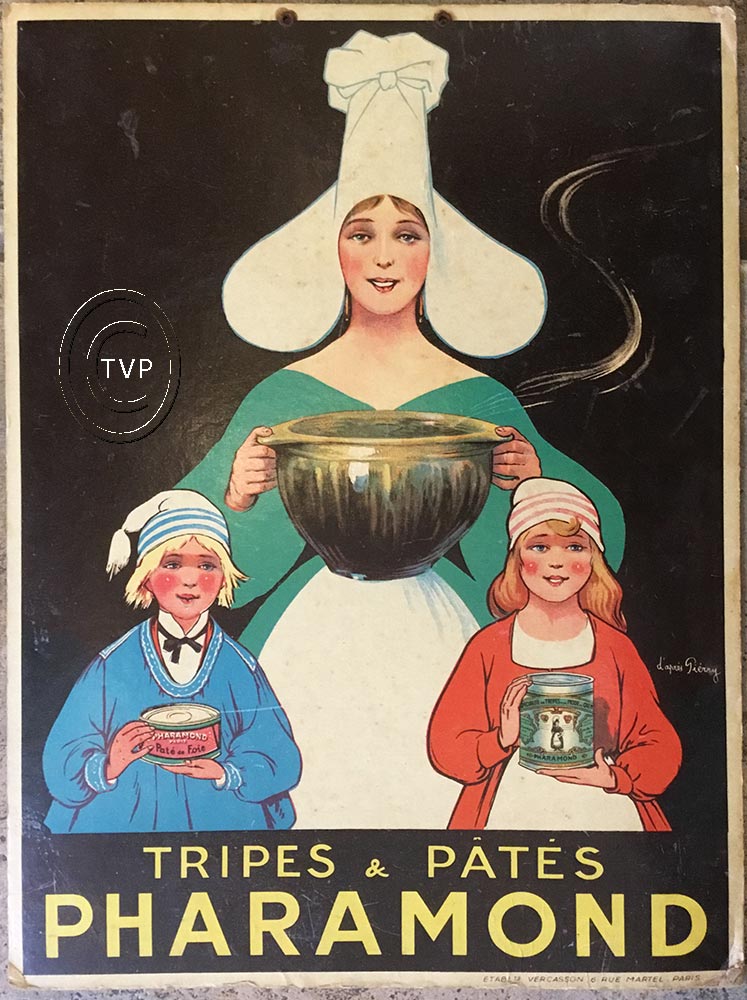
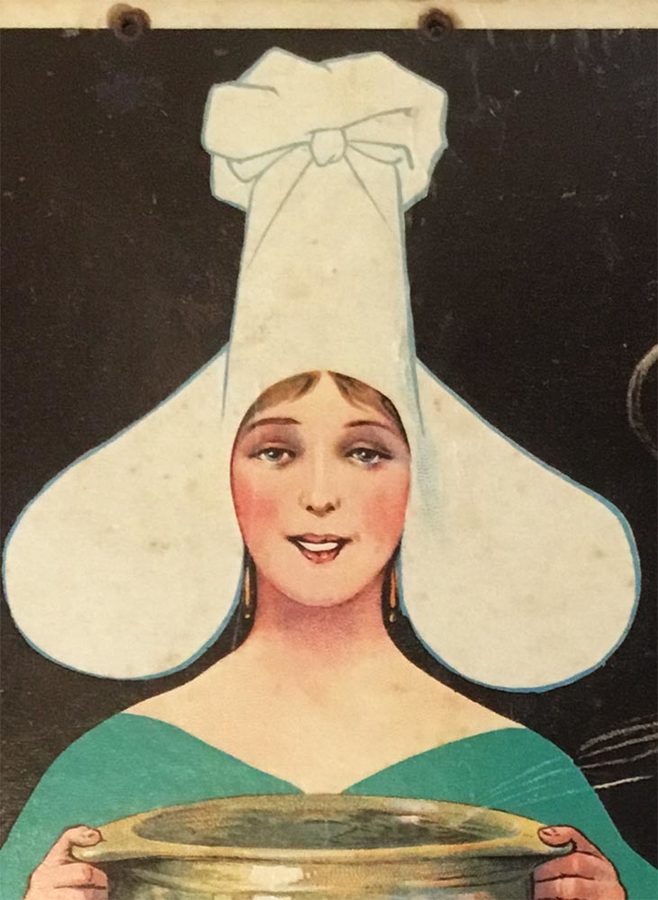
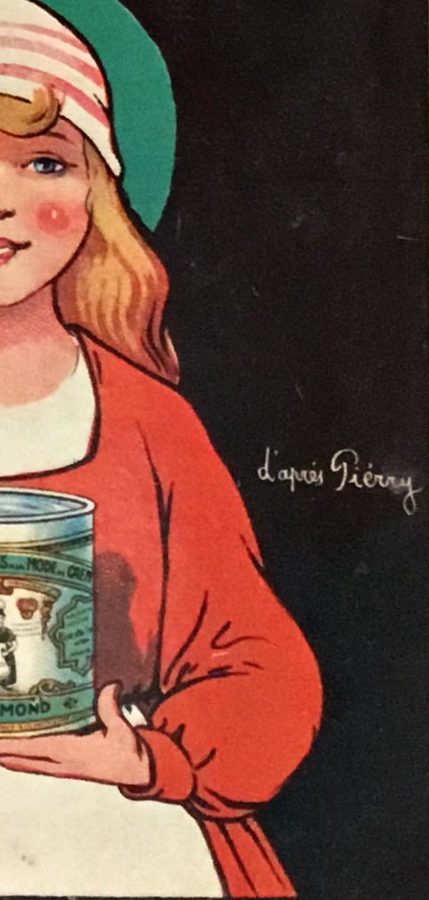
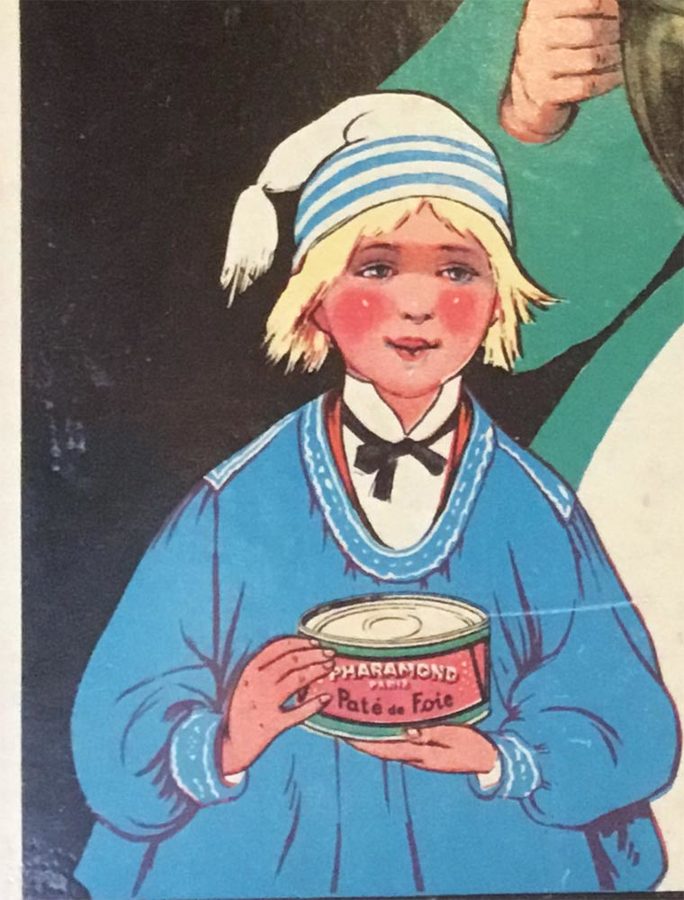
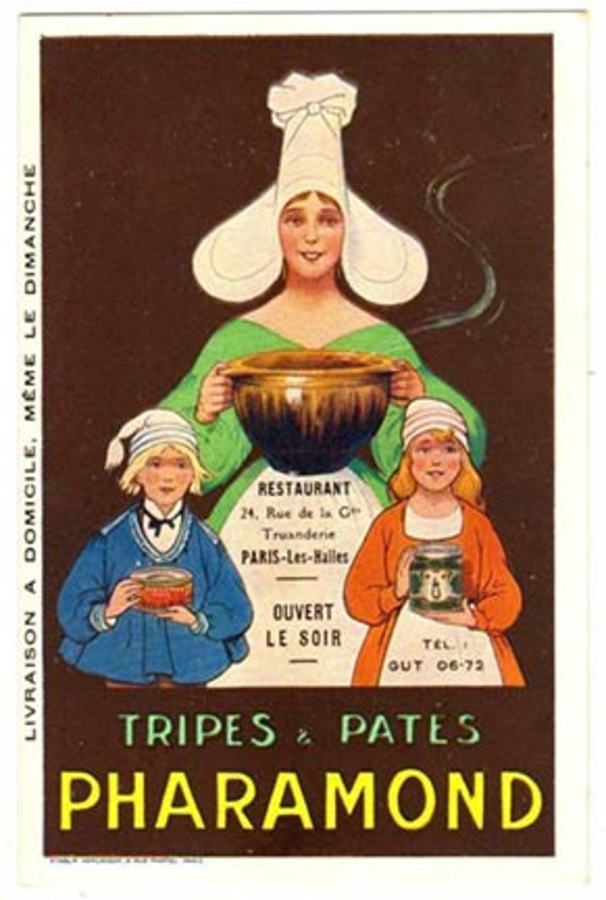
Descend into the Belle Époque grandeur of Parisian gastronomy with this theatrical oddity: an original Pharamond Tripes & Pates cartone—a rare artifact of turn-of-the-century restaurant advertising that hung in the storefronts and dining rooms of Paris’s most storied food markets. Dating to circa 1930, this lithograph captures the playful absurdism of French culinary marketing at its apex: a towering, androgynous figure with an impossibly tall headdress holds an enormous golden bowl aloft, while two rosy-cheeked children below clutch smaller bowls in reverent wonder. The composition reads as pure theater—a culinary fantasy made manifest in cardboard and lithographic ink.
The Pharamond story anchors this piece in genuine Parisian history. The restaurant family, of Norman origin, arrived in Paris in 1832 and settled in the shadow of Les Halles—the legendary central market known as “the womb of Paris” by Émile Zola. In 1879, Alexandre Pharamond opened his eponymous restaurant, consecrating a family name to the dish of tripes à la mode de Caen, a Norman delicacy that became synonymous with Parisian working-class elegance and market-district tradition. This cartone represents that world: the intersection of culinary pride, theatrical salesmanship, and the irreplaceable culture of 19th- and 20th-century Paris.
What makes this piece truly rare is its original cartone format—a thin cardboard backing that allowed smaller promotional lithographs to be hung from string inside restaurants, butcher shops, and market stalls for extended display periods. Unlike posters designed for temporary pasting, cartones were built to endure, their sturdy backing absorbing the grease, smoke, and chaos of working kitchens and market floors. They survive in far fewer numbers than their flat-poster cousins; this example, with its authentic period imperfections and gently worn corners, bears the honorable patina of genuine commercial use—a window into the material world of 20th-century Parisian food commerce.
Perfect for collectors of French restaurant ephemera, culinary history enthusiasts, advertising art connoisseurs, interior designers seeking authentic period bistro aesthetics, and anyone drawn to the mythology of Les Halles and Belle Époque Paris. This is not merely décor—it’s a primary historical document of French gastronomic culture, a conversation piece that connects directly to the culinary identity of Paris itself. Certificate of Authenticity included.



Reviews
There are no reviews yet.