



Description
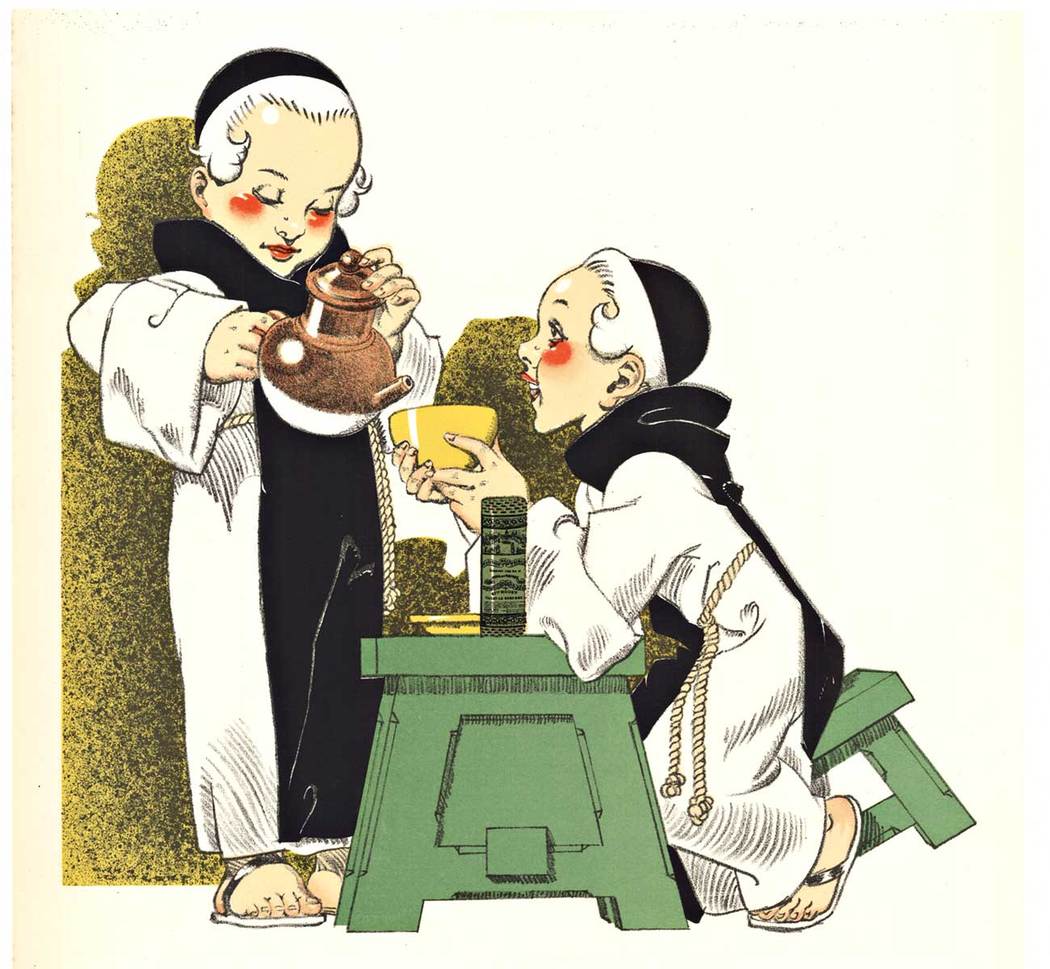
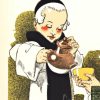
Composition des Moines sold itself through heritage and ritual. This 1925 lithograph by René Vincent is the brand’s visual argument made perfect. Look at those two monk figures positioned around the green Art Deco apparatus—they’re not religious iconography, they’re brand ambassadors. The robes signal authenticity, tradition, and craft. Vincent renders them with warmth and humor, inviting you into something sacred without being solemn. The product is the experience of quality. That’s masterful commercial design.
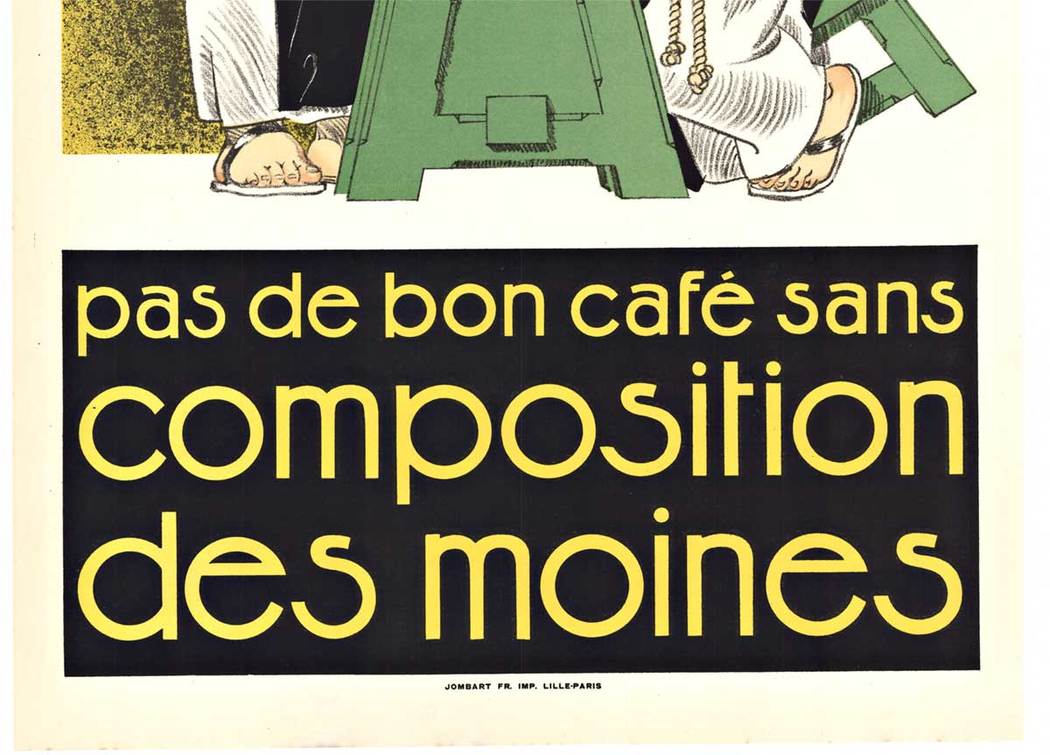
René Vincent (1879–1936) understood what Composition des Moines needed to communicate: a coffee roasted with monastic care, prepared by custodians of excellence, positioned above mass production. The typography does the heavy lifting here—that bold yellow-gold sans-serif band declaring “pas de bon café sans composition” (no good coffee without composition). It’s a guarantee wrapped in confidence. The green apparatus, rendered in clean Art Deco geometry, feels modern yet trustworthy. The brand isn’t fighting tradition; it’s modernizing it.
Stone-lithography made Composition des Moines’ visual identity possible at scale. Vincent’s design shows complete command of the medium. The color separation is precise; the drawing demonstrates a confident understanding of what lithographic stone delivers. Each element—the monks’ robes, the apparatus, the lettering—was separated into individual color plates and printed in sequence. This wasn’t quick or cheap. It was professional commercial art directing French consumer culture in the 1920s.
Collectors prize Composition des Moines posters for several reasons: Vincent’s reputation as a commercial designer, the Art Deco aesthetic that’s never dated, the coffee-culture narrative, and the condition (linen-backed, fine/mint). This piece captures a moment when French brands positioned themselves through design intelligence and cultural authority. Owning a Composition des Moines poster means holding a record of how companies elevated commercial messaging into genuine art. That’s historical and aesthetic value combined.



Reviews
There are no reviews yet.