


Description
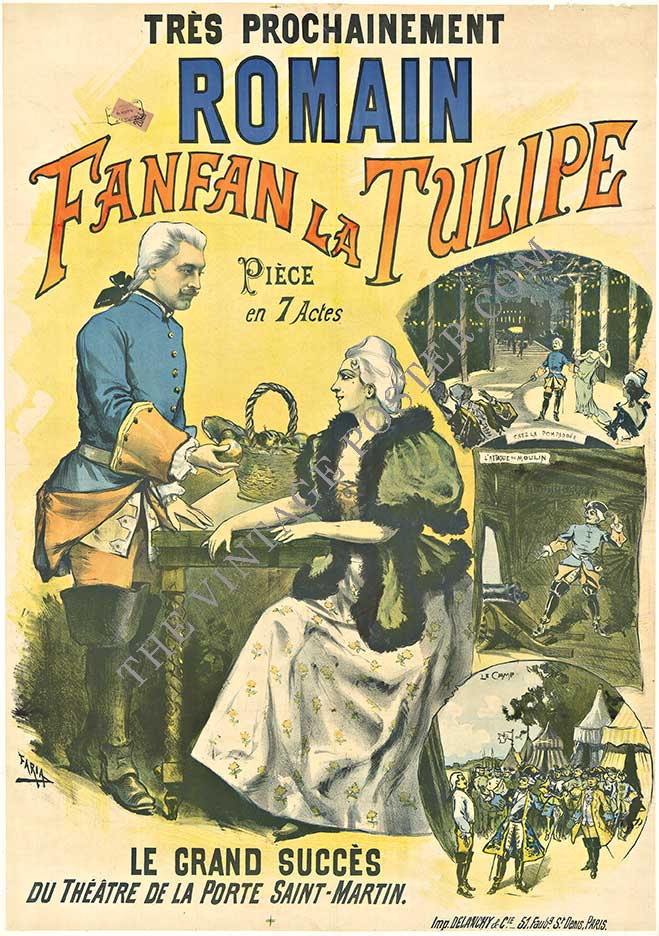
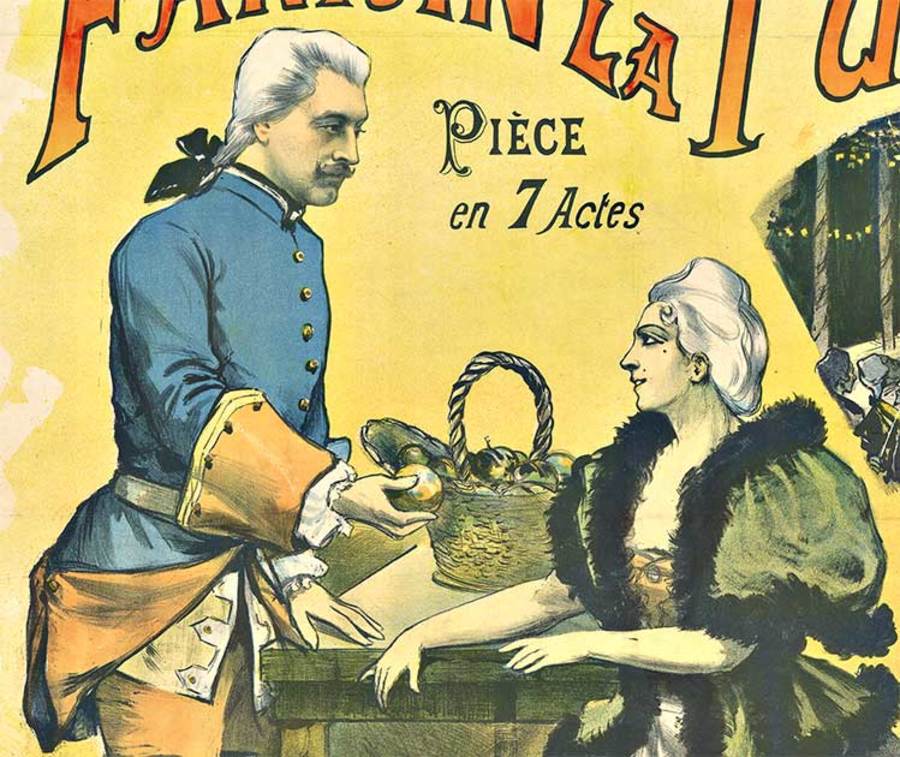
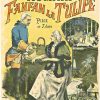
There’s magic in the moment when a woman’s prophecy becomes a man’s fate. That’s what Faria captured in this poster for Fanfan la Tulipe—the instant when Adeline the gypsy dangles destiny in front of Fanfan like a golden thread, and he can’t help but follow. Join the French army, she tells him. Marry a king’s daughter. It’s absurd. It’s impossible. And he believes her absolutely.
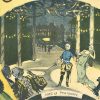
This is theater at its purest: the collision of desire, trickery, and fate. A handsome young peasant meets a clever gypsy woman who sees an opportunity—not just to dupe him into military service, but to remake his entire life through the sheer force of her conviction. The poster captures that exact moment of seduction. Adeline’s gaze is knowing. Fanfan’s posture suggests he’s already half-convinced. The interior scene glows in the background—a hint of the world he’s about to leave behind, the life he’s about to abandon.
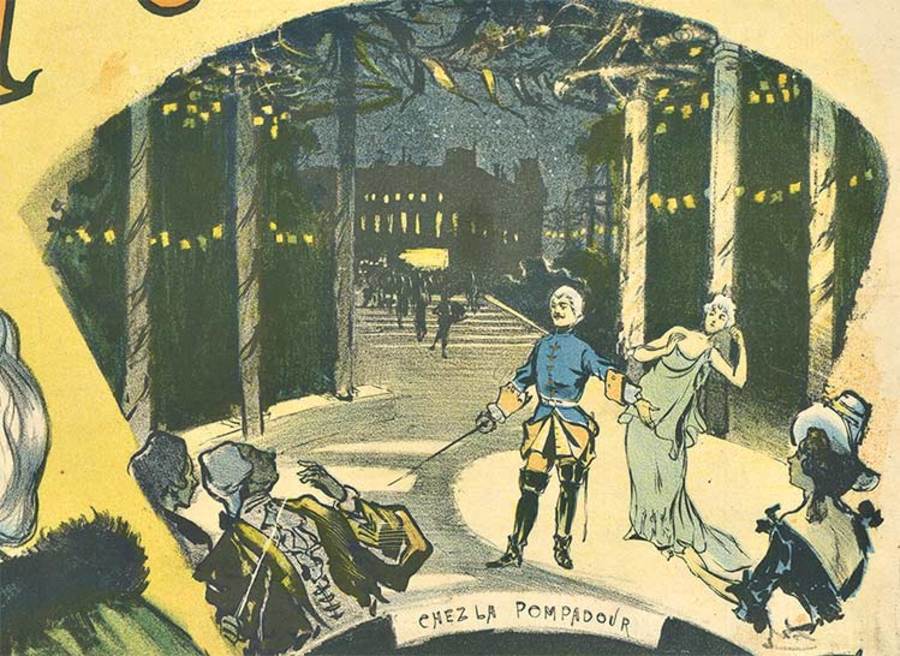
What’s remarkable about Faria’s composition is how he communicates the entire narrative through gesture and positioning. You don’t need the text to understand what’s happening. The woman leans forward with confidence. The man’s hand moves toward her, drawn in. Their proximity creates tension. The background figures—ghostly, almost theatrical—suggest both the intimacy of the moment and its larger consequences. This is a seven-act play compressed into a single image, and Faria’s skill lies in making you feel the stakes.
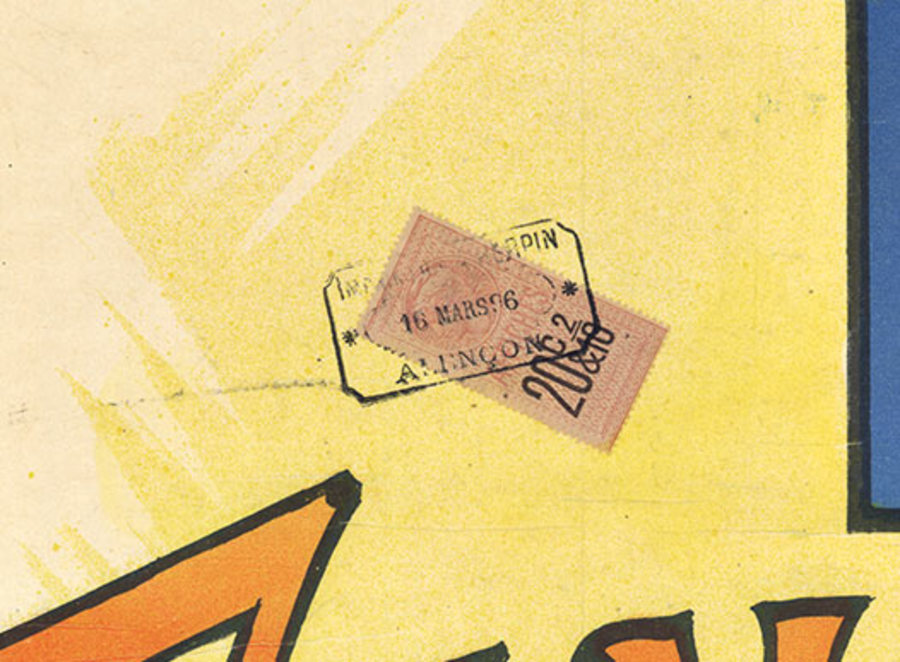
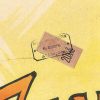
The color palette is quintessentially Belle Époque: warm ochres, deep blues, rich greens. That tax stamp in the upper left corner isn’t just a bureaucratic detail—it’s a piece of authentic history, proof that this poster lived in the world, was taxed, was real. Over 120 years later, it still holds its integrity. Linen-backed and carefully conserved, this piece hasn’t faded into sepia nostalgia. It still vibrates with the energy of a theatrical moment that mattered to audiences who lined up to see it unfold on stage.
For collectors of Belle Époque theater, this is the kind of poster that anchors a collection. Original Faria work from the 1890s isn’t common. Finding one this large—33 by 47 inches—in this condition, with this level of narrative sophistication and compositional brilliance, is the kind of discovery that reminds you why you started collecting. This isn’t just a piece of theater history. It’s a window into how artists understood the power of visual storytelling when theater was still the dominant art form.




Reviews
There are no reviews yet.