
Description
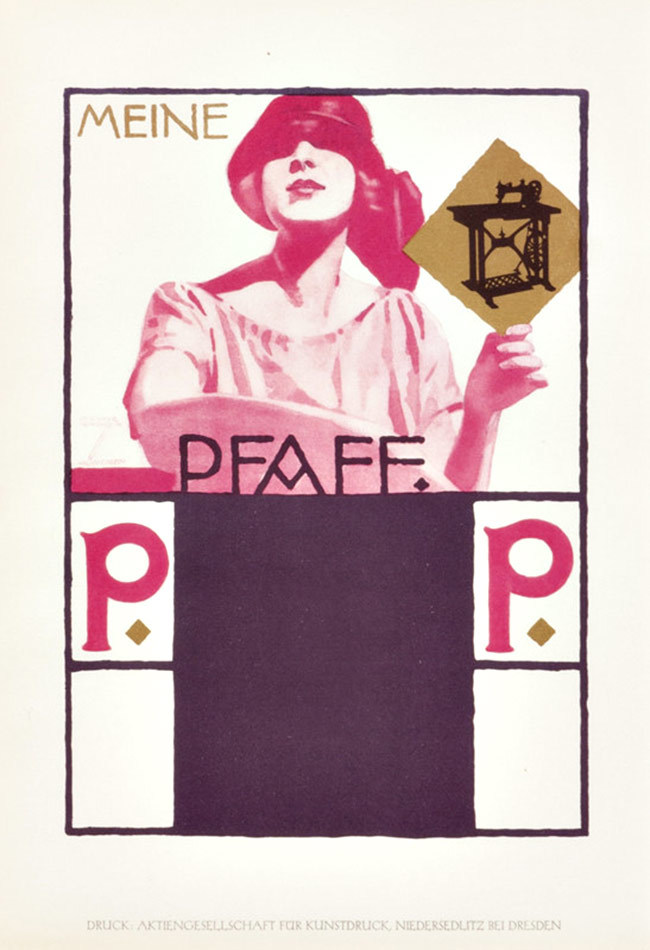
This stunning 1926 Hohlwein Meine Pfaff sewing machine poster exemplifies the golden age of German advertising art. Created by Ludwig Hohlwein, one of the most influential poster artists of the early 20th century, this ex libris bookplate celebrates the Pfaff sewing machine brand with characteristic boldness and elegance.
The composition captures Hohlwein’s signature style: simplified forms, striking color contrasts, and an immediate draw to the product. The “Meine Pfaff” (My Pfaff) messaging positioned the sewing machine as a personal companion—a revolutionary approach to advertising in the 1920s that emphasized emotional connection over mechanical specs.
This particular piece served as both a functional bookplate and promotional art, distributed by Pfaff to showcase their manufacturing excellence during an era when home sewing was central to domestic life. The 1926 dating places it during the peak of Hohlwein’s career and the height of German lithographic craftsmanship.
In Grade A condition with vibrant color retention, this vintage sewing machine poster represents both an important moment in advertising history and a masterwork by one of the era’s greatest visual communicators. The original 1926 lithography process yields a depth and texture impossible to replicate in modern reproductions, making this a particularly coveted example for serious collectors.
Collector Appeal:
Vintage sewing machine advertising has emerged as a dynamic collecting category, blending textile history, design appreciation, and nostalgic value. A Hohlwein Meine Pfaff poster represents the intersection of three collector interests: German advertising art, Pfaff machine history, and art deco design. Hohlwein’s limited output of sewing machine posters makes these particularly scarce compared to his cigarette and beverage advertisements. For collectors of vintage advertising, Pfaff enthusiasts, and art deco specialists, this 1926 lithograph offers both aesthetic appeal and investment potential. The enduring quality of Hohlwein’s design work ensures continued appreciation among serious collectors and museums with advertising art collections.

Reviews
There are no reviews yet.