


Description
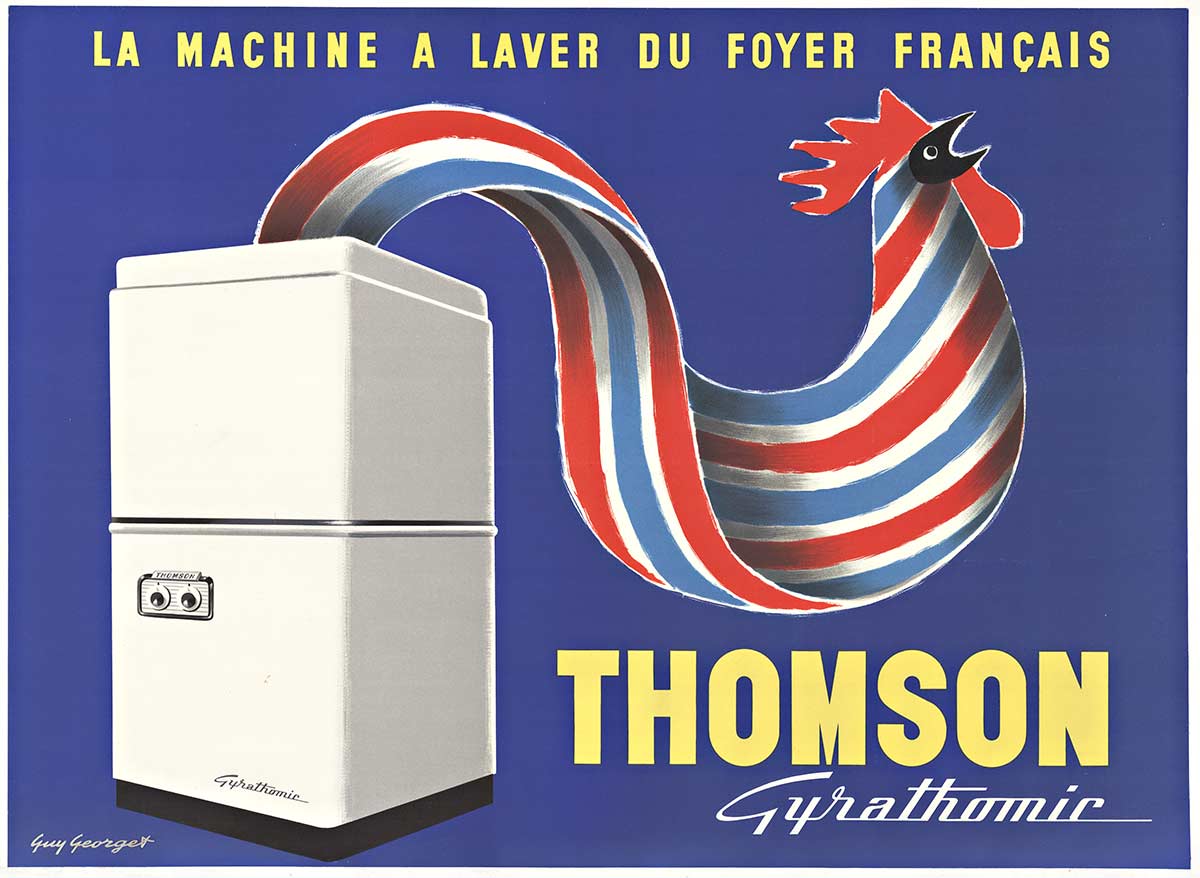
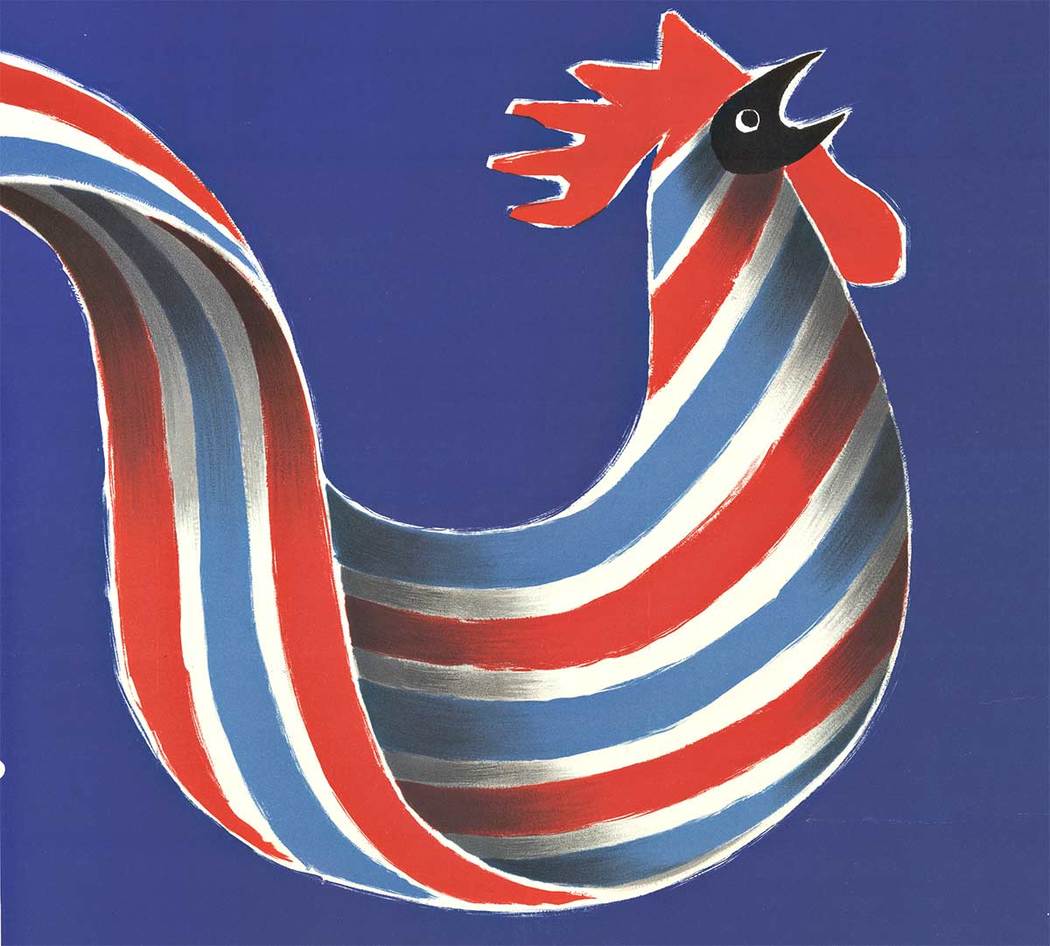
Pure mid-century joy bursts from this page—look at that French rooster exploding from the top of the Thomson Gyrathomic with unbridled enthusiasm. Guy Georget understood something fundamental about 1950s optimism: the modern washing machine wasn’t just an appliance, it was liberation itself, worthy of celebration with patriotic ribbons and cheerful barnyard abandon. The rooster becomes the perfect visual metaphor—this machine makes your laundry sing. The bold blue field and that crisp white machine create an almost architectural presence, while the red, white, and blue ribbons dance upward with pure exuberance. You’re acquiring a moment when technology promised to transform everyday life, and Georget captured that promise with wit and visual brilliance.
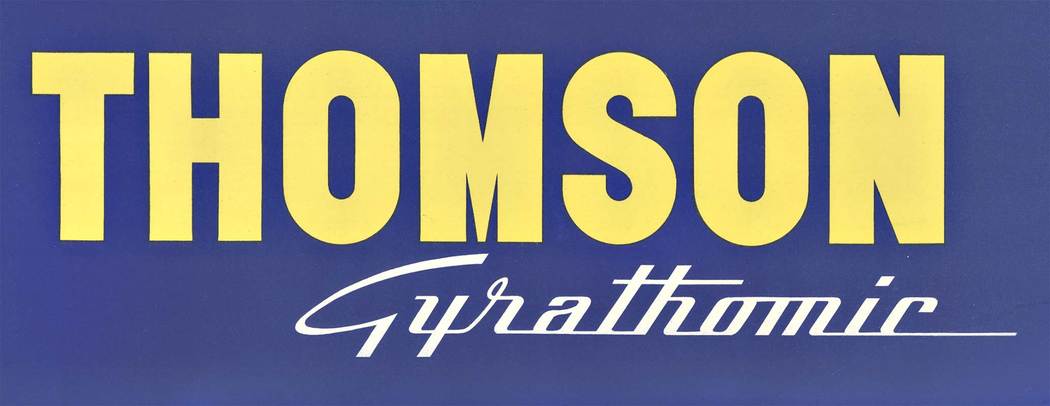
The composition is masterfully balanced. Notice how the rooster’s energy pulls your eye upward, transforming the simple washing machine into a beacon of domestic progress. The typography sits confidently at the base—”THOMSON Gyrathomic” in bold yellow—grounded while everything else soars. Georget’s palette is restrained yet explosive: the saturation of that blue against cream and white creates maximum impact. The French text “Machine à Laver du Foyer Franc” asserts national pride in modern technology. This is advertising design that celebrates both product and optimism. The “Jetsons” aesthetic wasn’t accidental; it was the visual language of postwar prosperity speaking directly to the modern homemaker.
The condition here is excellent. This is an original lithograph—not a reproduction—professionally conserved and linen-backed. The 6″ tear sustained over seventy years has been expertly repaired; no paper loss remains. At 42″ × 30.5″, this is a bold statement piece, the kind of large-format poster that dominated laundry rooms and kitchen showrooms. Survival of mid-century appliance lithographs is increasingly rare; most have faded, curled, or disappeared into landfills. This authenticated piece represents proper stewardship of design history.
What makes this poster culturally essential is its window into postwar French consumer confidence and the role advertising played in the domestic revolution. Guy Georget’s work bridges traditional craft printmaking with cutting-edge marketing vision. Collectors recognize 1950s appliance posters as primary documents of mid-century design evolution and the birth of modern marketing visual language. This is where contemporary commercial aesthetics were born. You’re holding a piece of the conversation between industrial progress and human aspiration—a rooster’s crow for the modern age.




Reviews
There are no reviews yet.